
If you’ve searched “how much do veneers cost,” you’ve probably noticed that the numbers you find online are all over the map — and that almost every source hedges with “it depends.” That hedge is actually the honest answer. The cost of porcelain veneers in Los Angeles varies more from patient to patient than almost any other dental treatment, because a veneer case is custom-designed from start to finish: how many teeth, what material, which ceramist, and how much preparatory work your smile needs before the veneers ever touch your teeth. This guide walks through the real price factors, what a consultation at our Koreatown office includes, and how to get a number you can actually plan around.
Why No One Can Quote Veneers Sight-Unseen
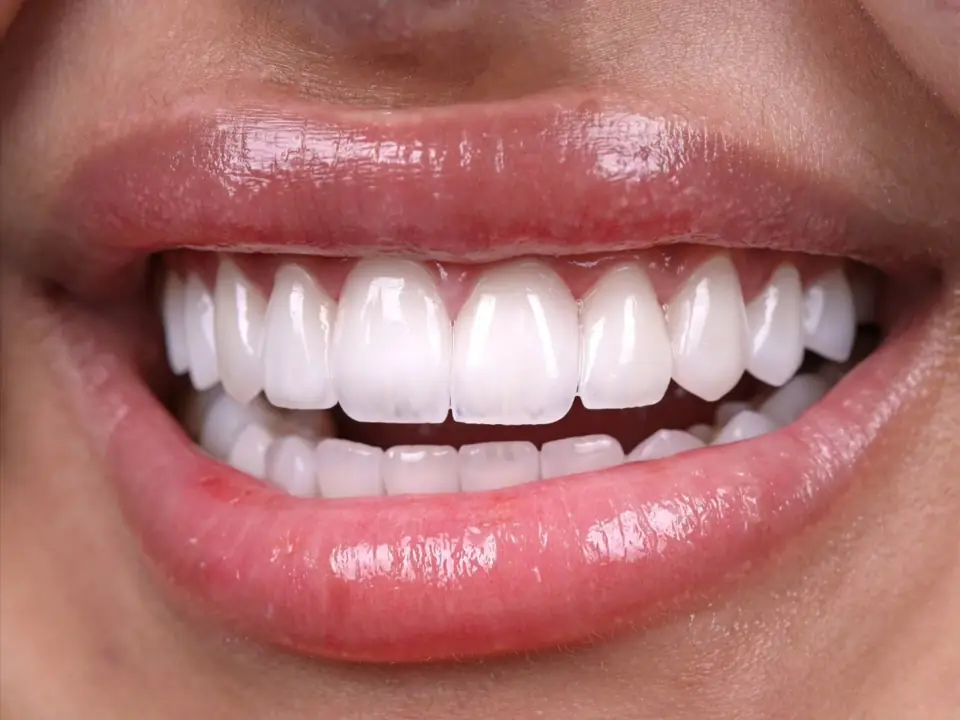
A porcelain veneer is a thin, custom-crafted shell of ceramic bonded to the front of a tooth. That sounds simple, but the treatment around it is not: the dentist has to evaluate your enamel thickness, gum position, tooth alignment, bite forces, and the shade and translucency of your neighboring teeth before a single veneer can be designed. Two patients asking for “a Hollywood smile” can need completely different treatment plans — one might be a straightforward eight-veneer case, while the other needs a bite adjustment or short orthodontic phase first.
Any office that gives you a firm total before examining your mouth is quoting a hypothetical patient, not you. The useful question isn’t “what do veneers cost in LA?” — it’s “what does myveneer case involve?” Answer that, and the cost follows accurately.
The Six Factors That Actually Determine Veneer Cost
When Dr. Edward Nam plans a veneer case, these are the variables that shape the final investment:
The number of teeth is usually the biggest driver. Most smile makeovers cover the teeth visible when you smile — typically six to ten across the upper arch — while some patients only need one or two veneers to correct a chip or a stubborn discolored tooth. The material and the ceramist matter more than most patients realize: a veneer’s lifelike quality comes from how the porcelain is layered to mimic natural enamel’s translucency, and master ceramists command higher lab fees for good reason.
Case complexity is the factor patients most often overlook. Veneers bonded over a misaligned bite are prone to chipping, so if your bite or crowding would put the porcelain at risk, Dr. Nam may recommend a short alignment phase first. That adds to the timeline and the total — but it protects the investment and produces a result that lasts.
What’s Included at ID Dental Implant Center
Because a veneer case succeeds or fails at the planning stage, our consultation is built around diagnostics rather than a sales pitch. Your visit includes a full cosmetic evaluation with a digital intraoral scan — and CBCT 3D imaging when the health of the underlying teeth needs a closer look. The scan lets Dr. Nam design your case digitally, which means you can see a preview of your proposed smile before committing to treatment, and refine the shape, length, and shade with him until it looks like you, not a template.
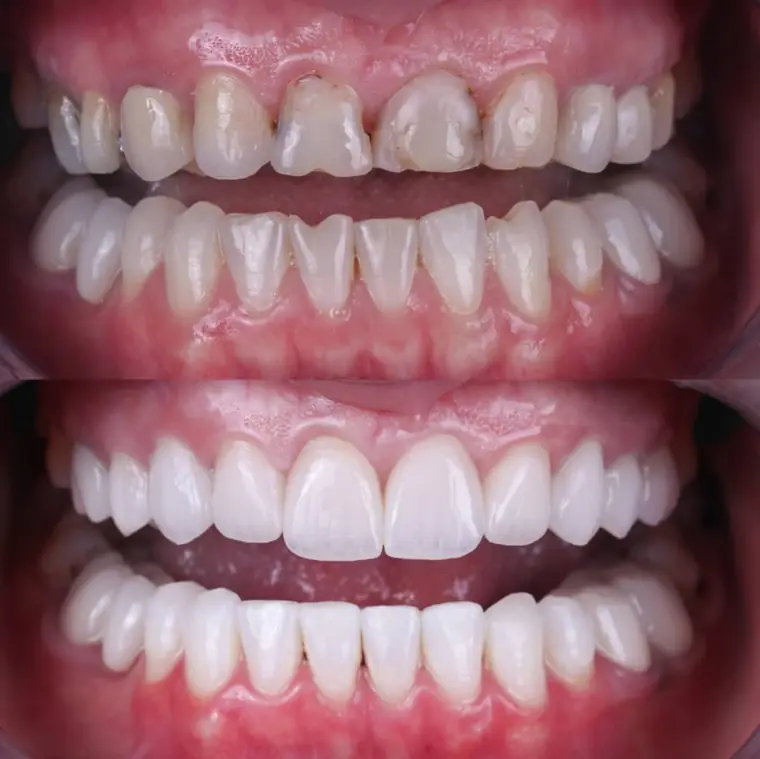
Dr. Nam trained at USC and completed advanced implant certification at Harvard, and cosmetic cases — veneers, crowns, and full smile makeovers — are a core part of his weekly caseload at our Koreatown office. Consultations are available in both English and Korean, and you leave with an itemized treatment plan: exactly which teeth, which approach, what sequence, and what it will cost for your specific case. You can browse real patient outcomes in our results gallery to see the standard we work to.
Will Insurance Cover Veneers? An Honest Answer
Here’s the part many offices bury: dental insurance generally does not cover porcelain veneers. Insurers classify veneers placed to improve appearance as elective cosmetic treatment, which sits outside standard benefits — regardless of which plan you carry.
That said, veneer cases often include restorative work that may qualify for coverage. If one of the teeth in your smile zone is cracked, heavily filled, or structurally compromised, the right treatment for that tooth may be a crown rather than a veneer — and medically necessary crowns are commonly covered in part. ID Dental Implant Center works with 20+ PPO insurance plans and verifies your benefits before treatment begins, so your quote separates what insurance contributes from what it doesn’t.
For the cosmetic portion, we accept CareCredit financing, which lets qualified patients divide treatment into monthly payments. Our team walks through the options with you at your consultation — no guesswork and no surprise bills mid-treatment.
Is a Veneer Even What You Need?
An honest cosmetic consultation sometimes ends with a recommendation against veneers. If your teeth are well-shaped and healthy but discolored, professional teeth whitening may achieve the change you want with no alteration to your enamel at all — a far more conservative starting point. Whitening first is also common before a small veneer case, so the veneers can be matched to your brightened natural shade.
At the other end of the spectrum, a tooth that is cracked, root-canal treated, or more filling than enamel usually needs full-coverage protection — a dental crown — rather than a thin facial veneer. Because our office mills crowns in-house with our Fastmill system, a crown can often be designed, milled, and seated the same day, without temporaries or a second visit. The right tool depends on the tooth, and part of what you’re paying an experienced cosmetic dentist for is knowing which tool that is.
How to Get Your Exact Veneer Quote
The path from “curious” to “confident number” is a single visit. At your consultation, Dr. Nam examines your teeth and gums, takes a digital scan, discusses the change you want, and identifies anything — bite, alignment, existing restorations — that would affect the plan. From there you receive a digital preview of the proposed result and an itemized quote for your specific case, including how many veneers, which approach, and what insurance or CareCredit financing can contribute. No pressure, and no obligation to move forward.
If you’re weighing porcelain veneers in Los Angeles, start by looking at real results from our office and reading more about how veneer treatment works. Then book a consultation at our Koreatown office at 3663 W 6th St STE 300, or call (213) 352-1080.